


Manufacturing Systems Engineering

The Manufacturing Systems Engineering (MFG) track provides students with the knowledge, skills, and abilities to successfully meet the most difficult challenges of modern manufacturing industries on a global scale. The track provides engineers with detailed state-of-the-art knowledge of traditional and advanced manufacturing technologies, systems integration techniques, economic analysis methods, and operations management practices and principles. With this knowledge, students are able to perform analysis, evaluation, and synthesis for a broad range of problems related to the design, implementation, and efficient operation of manufacturing systems.
Students within the graduate program in the manufacturing systems engineering track are assumed to have had undergraduate courses in simulation and optimization. If this is not the case, such students must make up this deficiency by either taking the appropriate undergraduate courses or by taking graduate courses in these areas. If graduate courses are taken, they can be used in the plan of study as elective credits towards the degree requirements.
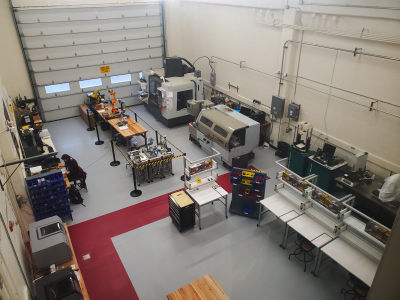
Manufacturing engineers focus on the design and operation of integrated systems for the production of high-quality, economically competitive products. These systems may include computer networks, robots, machine tools, and materials-handling equipment.
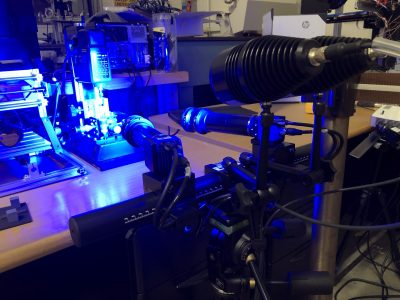
Manufacturing science and engineering plays a critical role in driving technological innovation. Continuing its history of excellence and innovation in manufacturing, ISE is currently leading manufacturing innovation in various areas, including emerging manufacturing processes, data analytics, sensor and biosensor design and analytics, quality control, and cyber security. ISE has expertise in bio-manufacturing processes, process monitoring, sensing, biosensing, sensor and data-driven quality control, and cyber-physical security for manufacturing. Partnerships exist between manufacturing faculty and partners from a variety of industrial sectors including the aerospace, automotive, transportation, healthcare, biomedical device, semiconductor and electronics, and pharmaceutical industries.
- Process engineer
- Data analyst/scientist
- Quality control engineer
- Quality assurance technician
| Master's Level | Doctoral Level |
M.S. or M.Eng. in Manufacturing Systems Engineering
| Ph.D. in Manufacturing Systems Engineering
|
Filling manufacturing jobs of the future requires engineers with an interdisciplinary education and cross-cutting skills that span industrial engineering, materials science, data science, computational design, automation and robotics, programming, and cyber security. The manufacturing track offers students the ability to acquire the interdisciplinary skillset required for manufacturing engineering jobs.
- Sensing
- Analytics
- Controls
- Automation
- Digital Twin
- Cyber-physical Security
- Machine Learning
- Artificial Intelligence
- Data-driven Process
- Quality Control
- Materials MFG
- BioMFG
- Lean MFG
Affiliated Faculty Research and Labs
-
General Item
-
Redirect Item
-
General Item
-
General Item
-
General Item
-
General Item


AFFILIATED FACULTY

Kimberly Ellis

Ran Jin

Blake Johnson

Zhenyu "James" Kong

Andrea L'Afflitto


Subhash Sarin


John Shewchuck


