Virginia Tech® home

Human Factors Engineering and Ergonomics
a student in V-R goggles. text reads "human factors engineering and ergonomics"
Human Factors Engineering and Ergonomics is concerned with designing jobs, machines, operations, and work environments compatible with human capacities and limitations. An HFEE practitioner, operating within an industrial or governmental organization, applies human performance knowledge to design or modify of equipment and generate new experimental data required for equipment design. 

Foundation coursework includes a detailed study of existing research, design, and evaluation methods appropriate to human factors engineering and ergonomics. Content courses include sensory ergonomics dealing with sensory capabilities and limitations of humans, physical ergonomics dealing with biomechanics and work physiology, cognitive ergonomics dealing with human information processing, and macroergonomics dealing with group processes. This coursework is supplemented by research opportunities in a variety of application areas including auditory communication, computer displays, industrial safety, training, and transportation systems. There is a emphasis ion specific content area courses, elective courses in the student’s area of interest, and laboratory research under the direct guidance of an HFEE faculty member.

Students should demonstrate basic computer proficiency. Students who have previously taken courses equivalent to those indicated may be exempt from such requirements determined on a course-by-course basis. Students must petition substitution of these equivalent courses in their plan of study. This petition must be approved by the course instructor and ISE graduate program director.

Our program is accredited by the Board of Certification in Professional Ergonomics (BCPE) and the Human Factors and Ergonomics Society (HFES).

Cognitive Engineering Human Factors of Systems and Product Design Occupational Ergonomics and Safety
  • Design digitial interfaces for products like apps, websites, interactive experiences.
  • Study human perception and cognition to design effective interactions with technology to promote safety, operational performance and innovation. 
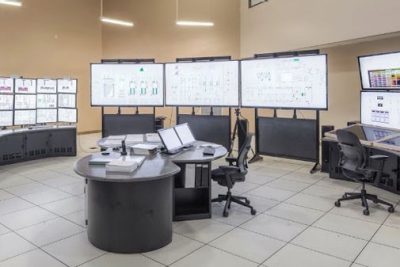
  • Establish critical systems like those used to manage power plants, the commerical airspace, or large military systems.
  • Ensure products match human's abilities, like ensuring hearing protection works for all types of people in all types of environments.
  • Combine physical and engineering expertise with knwoledge from the biological and medical science fields.
  • Ensure safe working environments for all employees, and minimize danger and risk of injuries. 


Cognitive Engineering Human Factors of Systems and Product Design  Occupational Ergonomics and Safety
  • Research Scientist, Meta/Facebook
  • UX Team Lead, Huntington Ingalls Industries
  • User Experience (UX) Research Lead, Intel Experience Group
  • Senior Associate in User Experience Research and Design, Lextant
  • UX Designer II, Microsoft Mixed Reality, Microsoft
  • Senior UX Researcher, Meta
  • Senior Product Manager, BluePath Labs
  • Ground Test Engineer, Sikorsky, Lockheed Martin
  • Human Factors Research Scientist, Global Center for Automative Performance Simulation
  • Group Lead Neuromuscular Biomechanics, Institute for Biomechanics, ETHZ Zürich
  • Senior Research Scientist, Amazon
  • Ergonomics Consultant, VelocityEHS
  • Wearability Engineer, Meta Research
  • Industrial Engineer, National Institute for Occupational Safety and Health
  • Director of Product and Design Technology, D-Ford Palo Alto 
  • Head of Safety Research, Android Auto at Google
  • Environmental Control Systems Manager, Boeing
  • Senior Director, Quality and Operations, Carilion New River Valley Medical Center
  • Safety Engineer, U.S. Navy


Master's Level Doctoral Level  

M.S., Human Factors Engineering

M.Eng., Human Factors Engineering

Ph.D., Cognitive Engineering

  • This concentration provides interdisplinary training and exposure to the major approaches, methods, and tools to understand the capabilites and limitations of human cognition and their impact on interactive systems design.

Ph.D., Human Factors Engineering and Product Design

  • In this concentration, a two-pronged coursework path is designed to instill skill and knowledge in both empirical research supported by human subject experimentation and analytical, modeling, and physical measurement methodologies. 

Ph.D., Occupational Ergonomics and Safety

  • This concentration is designed to provide interdisciplinary training and exposure to the major methods, tools, and approaches needed to improve occupational safety and health in the U.S. and beyond. 
 

Cognitive and systems engineering

  • Human-Systems Interaction Design and Evaluation
  • Virtual and Augmented Reality
  • Auditory/Acoustical Systems and Hearing Safety
  • Transportation Human-Machine Interfaces
  • Human-AI/Robot Teaming

Health and safety engineering

  • Worker Safety and Health
  • Transportation Safety
  • Product and Process Safety

Occupational engineering and ergonomics

  • Slips, Trips and Falls
  • Motor Control and Coordination
  • Musculoskeletal Injury Risk Factors
  • Ergonomic Exposure and Risk Assessment
  • Worker Safety and Health
  • Transportation Safety
  • Product and Process Safety

Affiliated Faculty Research and Labs

AFFILIATED FACULTY

Deborah Dickerson

Research Areas: Product safety (design, warnings), system safety (risk analysis, FMEA, safety performance)

Joe Gabbard

Research Areas: Augmented reality, AI-driven AR interfaces, UX, HCI, perception

Myounghoon Jeon

Research Areas:  HCI, HRI, XR: Audio, Affect, Assistive, Automotive, Aesthetic

Sunwook Kim

Research Areas: Ergonomics, biomechanics, ergonomic intervention, inclusive workplace technology 

Charlie Klauer

Research Areas: Driver distraction, novice teen drivers, driver fatigue

Brian Kleiner

Research Areas: Macroergonomics, domputer augmented work systems, computer supported collaborative work 

Nathan Lau

Research Areas: Cognitive engineering, user interface design, human performance, human systems integration, critical infrastructure, multiagent systems, unmanned aerial vehicles

Kichol Lee

Research Areas: Auditory situation awareness, hearing projection and communication, military ergonomics, product design and evaluation

Sol Lim

Research Areas:  Biomechanics, ergonomics, wearables, haptics, remote physical training, accessibility

Michael Madigan

Research Areas: Slips, trips, and falls, ergonomics, biomechanics, aging  

Maury Nussbaum

Research Areas: Occupational biomechanics and ergonomics, injury prevention, exoskeletons

Rafael Patrick

Research Areas:  Human-tech interaction, multimodal UX, audio perception and cognition